Posted on

Prevacuation: Using Information and Time to Make Evacuation Easier

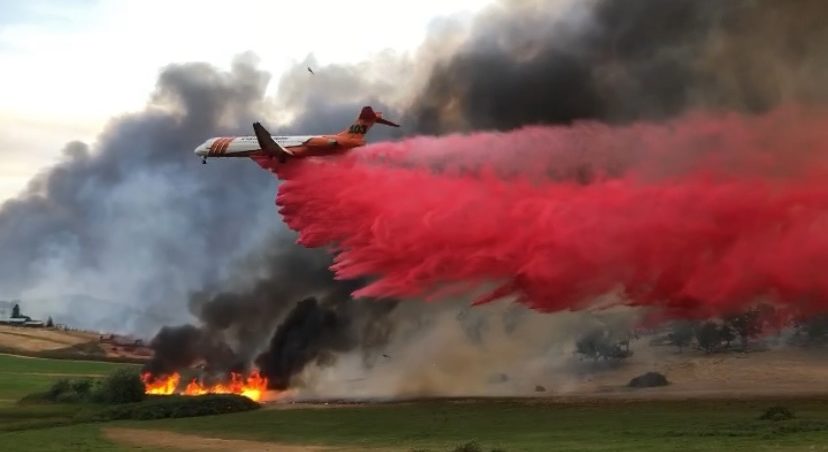
Rogue Valley Pre Evacuation

Prevacuation defined

If disaster may come your way, get out early.

Not everyone can do that, but the more people who get out early, the better for everyone, both people who really need help and first responders trying to keep people safe.

If you have somewhere safe to go, to family or friends, go there before an official evacuation is ordered.

That seems like a good idea. 

Unfortunately, it’s not simple, but it’s important to think about the option if you can.

Official Evacuation May Come Too Late

Waiting for an official evacuation notice may be too late for you and your people.

Continue reading Prevacuation: Using Information and Time to Make Evacuation Easier
Posted on 1 Comment

DLAD Vanguard Team Meeting 1 Notes

We want to make sure that everyone who wants to be involved can be, so we are publishing the notes of our initial meetings to keep you up to date. 

Also, so that anyone who might benefit from our work in the coming days has access to not only the product but the process that launches a local DLAD effort.

Meeting 1 of the DLAD Vanguard Team was on 20 June 2023 at 9am via Zoom.

The meeting included representatives of

  • Jackson County Community Long-term Recovery Group – LTRG
  • Jackson County Community Organizations Active and Disaster – COAD
  • Southern Oregon University, Institute of Applied Sustainability
  • Local Innovation Works
  • Humane Leadership Institute
Continue reading DLAD Vanguard Team Meeting 1 Notes
Posted on

Natural Disaster Followed By Avoidable Digital Disaster: A Proposed Solution

Update: this idea has taken flight and the DLAD program can be found here.

The Problems

  • Disaster response has become a data-intensive endeavor requiring vast amounts of data, governance, security, and analysis
  • Communities have not organized their digital leadership in such a way as to be able to quickly ramp up digital operations to meet the needs of other organizations active in disaster, at the national, state and local levels as well as the many community-based organizations active in disaster
  • Survivors of disaster suffer from this lack of proper planning and coordination
  • Disaster survivors should be asked for data one time and that data should be made available to all organizations they choose to involve in their recovery. 
  • Repeatedly collecting data re-traumatizes survivors and adds additional cost and delay to the process of recovery
  • Fraud is a very real challenge after disaster and data can help mitigate the possibility of fraud

A Proposed Solution

  • Create an active, standing DLAD (Dee-Lad or Digital Leaders Active in Disaster) before disaster strikes just as we create COADs and VOADs
  • DLAD would be comprised of local professionals from organizations who are willing to invest some time before disaster and substantial time in the wake of disaster to build a team to lead the digital elements of recovery
  • The skill sets required include
    • Data architects – for needs assessment data structure design
    • Data governance
      • Inputs
      • Validation
      • Security
      • ISA management 
    • Hardware, software, and database implementation management and support
    • GIS data analysis and user experience design
    • Analysts to support reporting and process modifications
    • User experience, website, and app designers
    • Government IT liaison to coordinate with and gain USA approvals/trust from FEMA and DoJ, SBA, USDA, state agencies, and local community organizations 
  • Design data structures to align with all reporting needs for federal, state and local as well as philanthropic stakeholders
    • Quintiles for standard measures of income, education, wealth, etc? 
    • To map to census and other data sets
    • Prior disaster best practices and learnings 
  • Pre map and pre collect status quo / baseline data that can be updated annually
    • Age
    • Ethnicity
    • Household size
    • Housing type & age
    • Jurisdiction – with demo norms pre disaster to ensure representative sampling post disaster 
    • Income – formal and informal
    • Community connections network mapping – relatives, friends, caregivers – web of people/orgs critical to your DLAs – trusted partners – daycare, medical, services
    • Community activity quality data – how active and connected was the person within some distance rings – e.g. this person has active social connections within 100 feet, 500′, 1 km, 5 km, 25, 50, 100, 1,0000k m. This helps us understand how rich the social fabric was that has been disrupted and what type of social setting might allow the person to feel at home and supported post-disaster
  • Design and build local data collection and governance tools to track survivors and their recovery.
    • Design a phone-based app that would work alongside United Us or similar platforms to immediately collect data on disaster affected community members. This data would be owned and controlled by the community.
    • Once the immediate response was over, the survivor data could be used to drive checklists to prepare for the FEMA application process, engaging with DCMs, etc. This data would have a release of information built in to the process so that survivors recovery is not limited by the data restrictions.
    • This would require careful PII practices just as Rogue Hub and other platforms do.
  • Organizations who may be able to contribute IT capacity
    • County government
    • Regional association of governments
    • Healthcare systems
    • Local technology firms
    • Large local businesses
    • Educational institutions
    • Large nonprofits
    • Individual consultants with specialized skills and experiences
  • Build relationships, trust, shared vocabulary and tools before disaster strikes across local organizations
  • Live into a shared commitment to stewarding the digital elements of recovery if and when disaster strikes

Where to Start

  • One digital leader, ideally in local government, needs to share this idea with a few of his most talented digital associates across nonprofit and business sectors.  I suggest 1:1 conversations to uncover interest and secure commitment to trying a few first steps.  Work towards a soft yes from each participant.
  • Gather a core team from the most willing and able people coming out of the initial set of 1:1 conversations.  Work towards a consensus on what to try first and how. The  key is to build social cohesion around a shared vision and get each member involved in moving at least one small task forward.  Momentum and social commitment building is the key to this step.
  • Build clarity and alignment with all the most visible and influential local leaders and organizations possible.  Work to earn influence by doing uniquely relevant work that supports your mission and the goals of local leaders.
  • Begin to network to state and federal disaster recovery leaders to become known as the DLAD for your area.
Posted on

Cutting the Gordian Knot of Attainable Housing in Oregon

Lack of housing affordable for working people is limiting our regions economic equality and growth.  Our essential workers cannot build stable lives and generational wealth if they are burdened by the cost of housing every month. You can’t save what you had to spend on housing. 

Oregon’s had a housing shortage for years, but our recent work in fire recovery allowed us to explore some of the questions and challenges surrounding the attainable housing issue.

Out of our commitment to looking at innovative solutions to local challenges, I worked with a student intern from Southern Oregon University to pull together data and ideas that may help us cut this Gordian knot of housing development challenges.

Click the image to view the PDF version of the paper

The paper is available as a pdf.

Our thought paper doesn’t offer definitive answers, but seeks to bring ideas into close relationship so that experts and people with power might have the spark of an idea jump between elements we’ve pulled together in a way that inspires urgent new action in promising new directions.

In the coming months we will be working with our community to pull together a series of conversations to begin exploring and developing potential solutions.

Before we close, we must acknowledge the inspiration offered by our many associates in Reimagine and Rebuild Rogue Valley and around the state of Oregon who have sparked our thinking on housing. A special thank you to Katherine, the amazing student who was my partner in pulling this paper together.

Thank you for all you do in our community,

Posted on

Winter 2021 Internship Showcase

This term 13 interns worked on a variety of projects supporting fire relief, local community organizations, and self-leadership. Interns presented their projects on Tuesday, March 23, 2021. Below are descriptions and links to each presentation, then the full showcase video is embedded at the end of this page.

Recovery Dashboard

Sabra worked with the nonprofit Remake Talent to create an interactive fire recovery dashboard using ArcGIS, county data, census data, and linking live data from other sources using APIs. She will be continuing to develop this project through the spring term. Video of the presentation.

Rogue Forest Restoration Initiative

Turtle worked with four non-profits and six public agencies to create a geospatial infrastructure to facilitate collaboration on project scale forest management, monitoring, and restoration in the Rogue Basin. Video of the presentation.

Family Nurturing Center Client Needs Data

Nicholas took survey information gathered by Family Nurturing Center to understand what the community was telling us about their needs and learn how to address the community’s core issues. Video of the presentation

Map of Fire Relief Organizations

Finlay created an interactive online presentation of the evolving network of fire relief organizations that provide resources to the Rogue Valley. Video of the presentation

Community Investment Fund

Brian continued another intern’s work started in Fall 2020 of creating a community investment fund, researching gaps between local banks’ loan terms and the ability of underserved entrepreneurial borrowers to get credit. Video of the presentation

Wellness Support Instagram Profile

Creating an Instagram wellness channel, Kelsey shared tips for mental health, well being, and resiliency, and also met individually with her many followers to support their personal journeys. Video of the presentation

U.S. Fish and Wildlife Forensics Lab Genetic Sequencing

Ritikaa worked at the local Forensics Lab to increase their reference sample collection to include DNA extracted from a variety of species. Video of the presentation

Self-Leadership and Discovery Through Songwriting

India created one original song by herself, critically examining and refining her creative habits to gain some insight into her artistic process. Video of the presentation

Accounting Support for the City of Phoenix

Hannah was originally tasked with sorting out the City of Phoenix’s water billing accounts post Almeda Fire. She then tackled the city’s 2021-2022 budget (yes, seriously!). Video of the presentation

Spanish Translation of Fire Relief Resources

Jorge continued working with LIL for a second term, this time helping Mi Valley Mi Hogar ensure that all their outreach materials are accessible to the Spanish speaking population.

Funder Database

Another intern (who wished to be unnamed) worked with the Gordon Elwood Foundation to create a “visually appealing, accessible online database profiling key funders in the Southern Oregon region.” 

Local Innovation Works Social Media and Website Support

Ryden helped to post events and updates on Facebook and to revise and add content to the LIW site.

The full showcase video hosted by Ellie Holty, Program Director of the Local Innovation Lab, and Stephen Sloan of the Humane Leadership Institute: